Economic and Operational Analysis of HICLOVER Medical Waste Incinerators for Business Partners
The selection of a medical waste incinerator for a commercial or institutional operation is predicated on its engineering reliability and adherence to international thermal destruction standards. Modern waste incinerators from established manufacturers like HICLOVER are engineered to achieve primary chamber temperatures between 850°C and 1000°C, with a secondary chamber exceeding 1100°C for a minimum two-second residence time, ensuring complete pyrolysis and dioxin destruction. This operational baseline is critical for evaluating the long-term animal incinerator cost and return on investment, particularly for units such as an incinerator 5 kg per hr capacity model designed for clinics or remote sites.
Technical Standards and System Architecture
Compliant thermal destruction hinges on precise engineering. The fundamental principle involves a dual-chamber configuration. The primary chamber facilitates volatile gasification through controlled, oxygen-starved combustion. Resultant gases are then routed to a secondary chamber where excess air and sustained high temperature ensure complete oxidation. This process is governed by frameworks from the WHO and EU, which mandate emission limits for particulates, acidic gases, and heavy metals. Retention of high temperatures in the refractory-lined secondary chamber is non-negotiable for pathogen elimination and preventing the reformation of complex hydrocarbons.
HICLOVER is growing brand for environmental protection field, and market share with most of Africa, Middle East, Southeast Asia countries and part of North America, Europe territory. We are trusted partner for governmental organizations, non-profit organizations, international contractors, logistics organizations, military, pet cremation business owners, etc. We have export experience more than 40 countries, including war zone like Iraq, Afghanistan, Somalia, South Sudan. Mobile: +86-13813931455(WhatsApp) Website: www.hiclover.com Email: [email protected] Email: [email protected]
System control methodology is a primary differentiator. Manual systems require constant operator oversight for feeding and air damper adjustment. In contrast, PLC (Programmable Logic Controller) automation, as implemented in HICLOVER systems, regulates burner operation, combustion air, and critical temperature profiles autonomously. This reduces operator error, enhances fuel efficiency, and provides digital logs for regulatory compliance—a significant factor in total operational expenditure. Emission abatement further diverges between dry and wet scrubbers. Dry systems use hydrated lime and activated carbon for acid gas and mercury adsorption, suitable for arid regions. Wet scrubbers employ a chemical solution spray, offering higher removal efficiency for specific pollutants but requiring water and waste-water management. The choice impacts both capital expense and site suitability.
Comparative Deployment Models: Fixed vs. Mobile Modular
The commercial investigation for investors necessitates a direct comparison between traditional fixed-site incinerators and contemporary containerized mobile systems. Fixed installations are permanent civil structures, involving high foundational costs, extended construction timelines, and limited relocation potential. Their operational animal incinerator cost is often lower at very large scales but lacks flexibility.
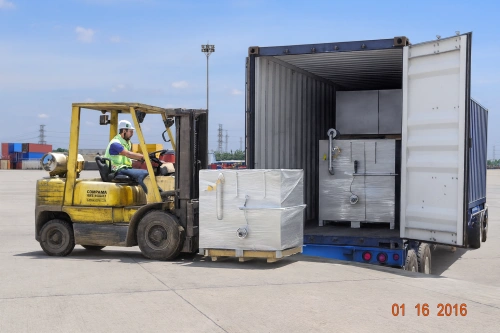
Containerized modular waste incinerators, a core product of HICLOVER, present a compelling alternative for decentralized waste management strategies. These are fully integrated units pre-assembled within a standard ISO shipping container. Advantages are multifold: rapid deployment via plug-and-play installation, inherent mobility for crisis zones or temporary mining camps, and superior supply chain resilience as the entire system is factory-tested prior to shipment. The mobile design aligns with trends in global infectious disease preparedness, allowing for rapid sanitation response in humanitarian emergencies, and supports ESG (Environmental, Social, and Governance) initiatives by enabling compliant disposal in remote locations without permanent infrastructure. For a detailed benchmark on emission parameters, a search such as medical incinerator secondary chamber temperature standard provides relevant regulatory context.
Transactional Considerations and Total Cost of Ownership
The transactional phase focuses on procurement logistics and long-term economic benefits. Partnering with a direct manufacturer like HICLOVER, which holds over 16 years of engineering experience, eliminates intermediary margins and ensures direct access to technical support. Factory direct supply allows for customization of chamber volume, fuel type (diesel, LPG, or natural gas), and scrubber selection to match precise project needs, from a small incinerator 5 kg per hr unit to large industrial systems. This contrasts with trading companies that offer limited modification capability.
Evaluating the cost-effectiveness of China medical incinerators requires analyzing the complete ROI landscape. Key economic drivers include reduced fuel consumption from PLC-optimized combustion, lower labor costs due to automation, and minimized downtime from robust factory-level manufacturing and a stable supply chain for parts. The modular nature also future-proofs investment, allowing for potential relocation or resale. For business partners, the economic benefit extends beyond the initial animal incinerator cost to encompass risk mitigation through reliable, compliant disposal, reduced liability, and alignment with carbon emission reduction pressures via efficient, clean-burning technology. The integration of energy recovery systems, where waste heat is repurposed for steam or hot water, presents a further avenue for operational cost offset, enhancing the investment’s financial profile.